
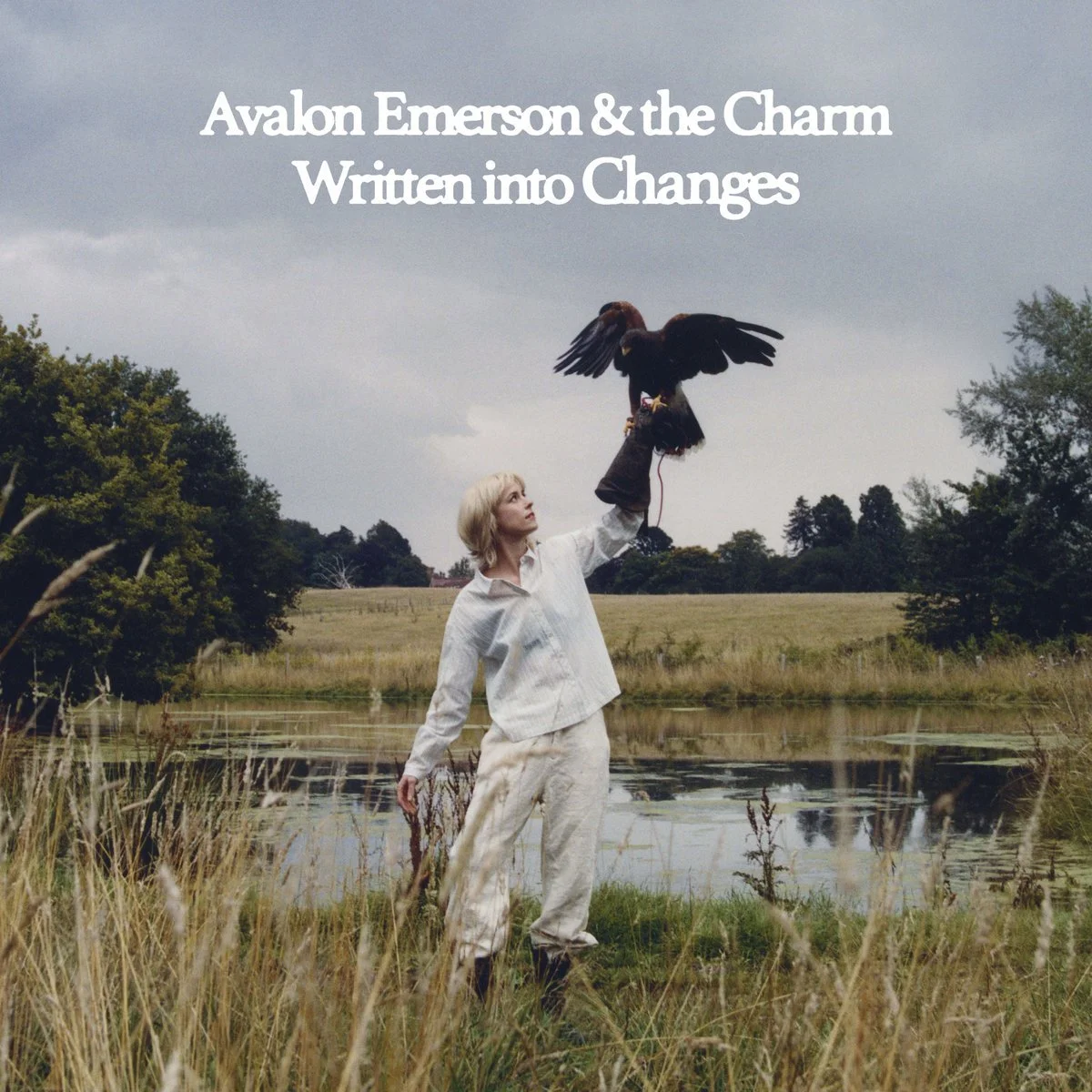
Written into Changes
Avalon Emerson & the Charm
Some things aren’t really the way they are. They’re the way they seem. A tomato doesn’t taste like a fruit, it tastes like a vegetable, and so it is. Young Thug isn’t washed; he’s still got it. That little flicker in the night sky isn’t an airplane wingtip; it’s probably a shooting star. And a light year isn’t really a measure of distance, not least because it is unfathomable, but mostly because it has the word ‘year’ in it. It is obviously a unit of time, terrifying and eternal and inevitable, time that is the precursor to space.
All of these weighty things—space and time and love and our complete and utter inability to do anything about any of them—are on the brain as Avalon Emerson sighs the words to the aptly-titled song ‘Jupiter and Mars’ from her wonderful new record, Written into Changes. “And in a light year or two down the line / when it all collapses on itself, folding time,” Emerson laments, “and our dust finds each other in the thin / I’ll understand if you leave me again”. A mournful sentiment, but then again, has resignation ever before sounded so intensely lovely?
Yep. You’re listening to pop rock. The genre that serotonin built: springy acoustic guitars, lite-funk wandering basslines, peroxide-white breakbeats, warbly synths. Major key melodies! Triumphant hooks! A genre that dates itself so violently that when the bubble bursts, everyone becomes so cynical about it that we’re only allowed to have one The 1975 for the next twenty years. The least cool music that Hollywood ever sunk its teeth into. Doesn’t Avalon Emerson make it sound so sick?
I reckon it was written in the stars. Emerson couldn’t be more tasteful if she tried. Written into Changes is her second record moonlighting as a singer-songwriter with her band the Charm—Emerson day job is DJ, residing at Brooklyn’s Nowadays and Berlin’s Panorama Bar among other powerhouse clubs—and her instinct for the precision and euphoria of dry techno translates gloriously into her side project.
Emerson leans on years of drum programming experience to lend her rhythms an effortless propulsion and refrains from clamming her songs with too much of a good thing. Her arrangements are typically utilitarian but unusually spacious for pop rock: Written into Changes is lousy with quaint instrumental passages that most artists in the indie sphere simply wouldn’t have the production nous to justify. A minute into the quietly paranoid ‘Wooden Star’, the song detours from a patient crescendo to wade liminally in a seasick groove punctuated by dubbed-out scratches of string and horn that fly chaotically around the mix like apocalyptic debris. The extended outro of ‘God Damn (Finito)’ luxuriates in the sound of its own bulletproof funk, emulating the indulgence of an apocryphal ‘70s disco twelve-inch.
It sounds great. Obviously. But Written into Changes transcends because, as the album’s title alludes, it is written so thoroughly interestingly. Avalon Emerson writes like James Murphy if he had a heart. All these fucking Los Angeleans pretending to be New Yorkers making hollow indie sleaze music, no wonder it took an actual Brooklyn DJ to start writing the kind of songs LCD Soundsystem are too rich to bother with anymore. You have to be willing to get earnest if you want to write something emotionally resonant, and thankfully Emerson sounds so comfortable in her millennial sentimentality that she is happy to gently probe a twee lyric until it gives way to pure catharsis. The therapy-speak mantra of ‘Happy Birthday’—“too young to die, too old to break through”—is patiently repeated at first, then transformed by the burnished melancholy of the song’s second verse: “So come on over, my love / All grown up but still short a buck / we’ll invite all the people you love / one more spin on the floor for luck”. It might remind you of ‘All My Friends’ if you squint a little.
Somehow, Emerson manages to corral a song beginning with lines pulled from an imaginary beer commercial—“So crisp and quenching, satisfying / how dare it hit the spot”—into a weepy, sleep-deprived anthem. How dare this bed be so warm, Emerson eventually wonders, bewildered by her nocturnal nine-to-five, “how dare it cradle me in my tears so gently?” The bottom falls out of ‘How Dare This Beer’ like a trap door, and suddenly you’re left with a yacht-rock tribute to being hungover cracking the sads. What a feint! What skill!
DJs are, by selection effect, not supposed be wordsmiths; meanwhile Emerson uses her occupation as a plot device to accent the drama of her own songwriting. “My moonlight is my day job / and my daylight is my night song”, Emerson reminds you on the glitzy, FIFA-song stunner ‘Eden’, deftly referencing the disorientation of her lifestyle to gesture at an overwhelming feeling of placelessness. It only amplifies the rapture of the song’s titular lyric, “you’re still my favourite place in Eden”, so hyperbolic and infatuated it almost feels unfair to quote it without an exclamation mark. The confidence Emerson invests in her foreign medium is unheard of among artists in electronic music, and yet it sounds like second nature to a DJ acclimatised to improvisation.
All over Written into Changes, Emerson expertly traffics in pop rock’s reserve currency: scale. It is an album of big-sounding songs made up of simple parts; of intimate anecdotes about irrepressible feelings. The sweeping, almost-Balearic chug of the title track does its best to imitate Emerson shrugging off her acute devastation as she sings plaintive lines like “never thought I’d say I’ll be seeing you around”. But even her smallest recollections are so inflated with emotion that they loom over the song like a spectre. “Fist tight, knocking at your door”, Emerson coos, again and again, chasing her syllables as they disappear into ghostly translucence. The memory is potent precisely because it is fleeting. Just because you feel it, means it’s there.
83
Sam Gollings
2 April 2026