
The Gem
Julia Jacklin
“You don’t have to call me up, dah-lin.” If an Australian accent has not, historically, been a songwriter’s most trusted friend, it at least finds a curious, specific resonance in the “ar” sound, which becomes a broad, beautiful, chest-emptying “ahh”. It reminds me of something written about the Alabama musician Katie Crutchfield, also known as Waxahatchee:
There is a trick Crutchfield uses, both on this album and the last, where she hollers the word “I” and stretches it across multiple syllables. The first person becomes just “ahh”, a primal yodel that swallows everything else… On the stunning late-album acoustic ballad ‘365’, she turns the word into a sharp intake of breath, the involuntary sound of sudden pain.
I find it interesting how different accents necessarily invoke the same sound in separate contexts. The Alabaman “ahh” is native to the first person: as such it tends to be a signpost for introspection, a callout defined by where and whom it is coming from. By contrast, the Australian “ahh”, usually emergent from either a verb or a term of endearment, trains its focus on the object, rather than the subject. (If an Australian were to instead say “I”, the sound would be different entirely, closer to “oii”…)
I’m tempted to argue this distinction symbolises something cultural. If Crutchfield’s “ahh” statement sounds unapologetic and primordial, the way the Naarm singer-songwriter Julia Jacklin employs it on the mid-tempo rocker ‘Get Away From Me’ hews closer to self-deprecation, an instinct baked into Australians like skin damage. “You don’t have to call me up, darling”, Jacklin assures her tentative lover, “and tell me that you care”, comfortable to let herself down ahead of time if it means cushioning her fall.
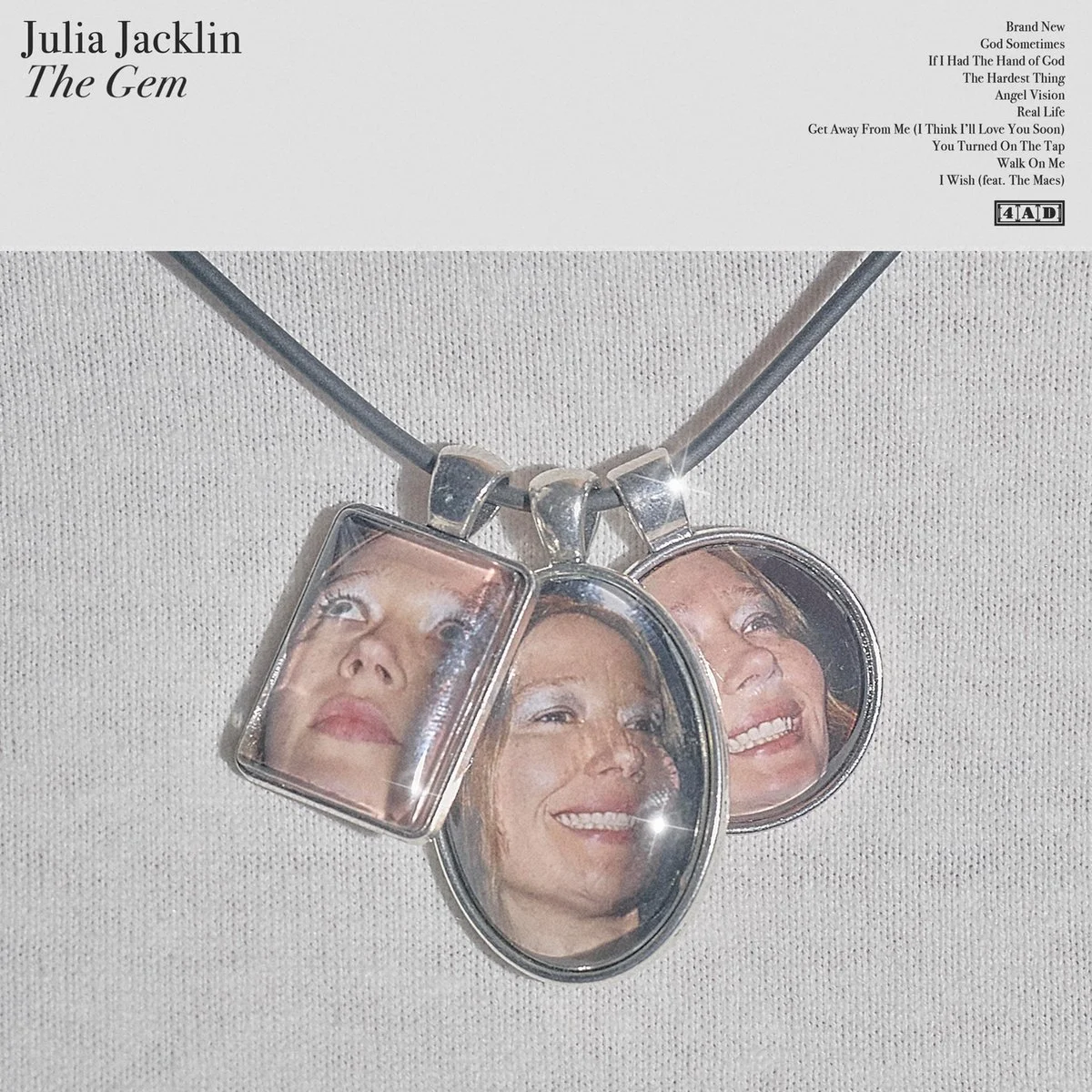
This kind of premonition for disappointment is a recurrent impulse on Jacklin’s richly-rendered fourth album, The Gem. The record opens with unnerving Celtic guitar and Jacklin documenting her eerie awareness of everyday traps laid out for her: “Today I’ll put down the knife / it won’t cut through”. Love is an unedifying and directionless ritual, the way Jacklin tells it, considerably bleaker than the generous guitar music buttressing her lyrics would suggest. The spiky garage rock of ‘The Hardest Thing’ almost disguises Jacklin’s lonely reflection, “I stood behind the horses to find they’re running towards nothing”. On ‘Angel Vision’, her ultimate conclusion is even more solemn. “I let you teach me things I already knew".”
“If I had the hand of God”, Jacklin wonders on her soothing-sounding song of the same title, “would the God whose hand I have be the kind to know when to let go before it gets this bad?” Take a second with that one. It’s wordy, but also kind of universal, right? Aren’t we all, always, in a way, fretting about how much agency we retain over our own lives? I’ve been listening to the album Highway to Hell incessantly this week—it is omg amazing—on which the Philadelphia songwriter Emily Moales wonders, at one point, openly, “how much of my life have I squandered?” I hear the same fear fomenting on The Gem.
It’s just our luck, though, that Jacklin is able to extract herself from the experience of feeling and articulate it with the composed air of a someone who knows what’s on the other side. One particularly memorable examination comes on the slow-burning climax to the album—the song ‘Walk On Me’. “The same time every day, when the band bends to play / I say, “I know this song” / You say, “Everybody knows this one”.” Jacklin takes a breath. The uncirculated pub air ripples with heat. The fan nearby does nothing. A fly buzzes past. The front bar is sticky with spilt beer. Jacklin needles herself in the thigh with a chopstick. She abandons eye contact. “So why am I the only person singing along?”
78
Sam Gollings
12 October 2026