
Big city life
Big city life, the spectacular 2025 album from the Norwegian cult pop outfit Smerz (Henriette Motzfeldt and Catharina Stoltenberg), deftly probes a variety of questions central to the institution of pop music: questions of cool and where it comes from; questions of imitation and artifice; questions of desperation and intimacy. All of these questions and deliberations and answers take place in the city—presumably Oslo or Copenhagen, where the duo respectively grew up and moved to—under misty streetlights, house-party floor lamps and club toilet fluorescent bulbs. Metropolitan air is intoxicating in Smerziland—a gas to huff through a little glass bottle; a potion to distil into liquid and down in a shot. “These streets are yours", Stoltenberg promises, “feel the music, roll the dice!” But there is one question Smerz never think to ask. Is Oslo or Copenhagen even a big city?
Naarm is a city of some five million people; Oslo and Copenhagen not quite two—but the truth is you could probably level some of the same big city doubts at Naarm as you might with those other Nordic capitals. These are all cities of cleanliness, relative homogeneity (or at least cultural segregation), cities of wide, open spaces. Though perhaps the big city is something that can only be determined with boots on the ground. Smerz were the triumphant highlight of the 2026 edition of NTS Naarm, the yearly satellite weekender put on by the cult London radio station NTS which I was lucky enough to attend last weekend. And that festival was the centrepiece of a particularly hectic past week of concerts that has left me with an acute suspicion that Naarm really is a big city full of possibility and density and enclaves and intrigue that I never accessed living here through my adolescence.
But the point of this preamble is not to enter into any meaningful conversation about demographics and culture—the point is actually to segue into a series of reflections on live shows from the past couple weeks that left an impression on me.
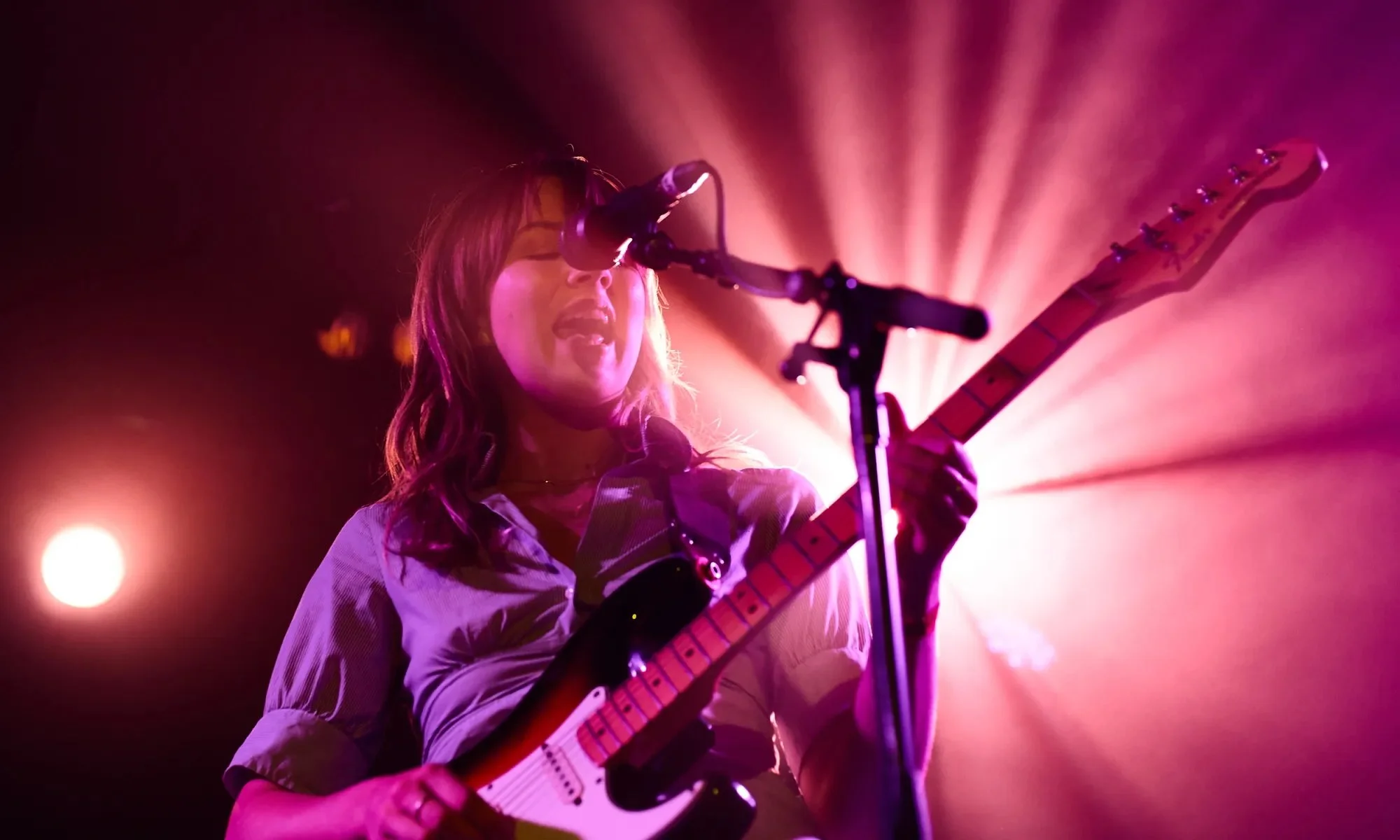
Photo: Lee Crawford
The Belair Lip Bombs — Corner Hotel, Friday 27 February
I really enjoyed the Lip Bombs’ record last year, Again (you can read my review of it here), but I remain completely blown away by their debut, 2023’s Lush Life, almost certainly my favourite album by an Australian artist… ever. So I thought their even-handed setlist at their Friday Corner show, which included probably the five strongest songs from Lush Life, was just about flawless. The tracks from Again that got a bit of radio play last year—the anthemic, cooing ‘Hey You’; the lovedrunk grunge of ‘Back Of My Hand’—unsurprisingly drew the most vocal crowd reactions of the night, though the evening’s highlight was ‘Look The Part’, a terse post-punk sleeper hit. The band sound as tight live as they do on their studio recordings and they let the songs speak for themselves.
Drifting Clouds, Voice Actor — NTS Naarm, Saturday 28 February
I entered Northcote Theatre at about five-pm to the sound of the Weeknd. Abel Tesfaye had, of course, not been drafted to play at NTS Naarm 2026, but Yolŋu artist Drifting Clouds (Terry Guyula) has a remarkably similar timbre of voice and penchant for 80s pop. That particular sound could scarcely be better suited to the cool, styled surrounds of the renovated Theatre, so it was a little surprising that the crowd was not more taken by his graceful oscillation between various schools of synth-pop revivalism: the soupy, saxy extravagance of the Weeknd; the Balearic bliss of Intermood; the longing restraint of Blood Orange.
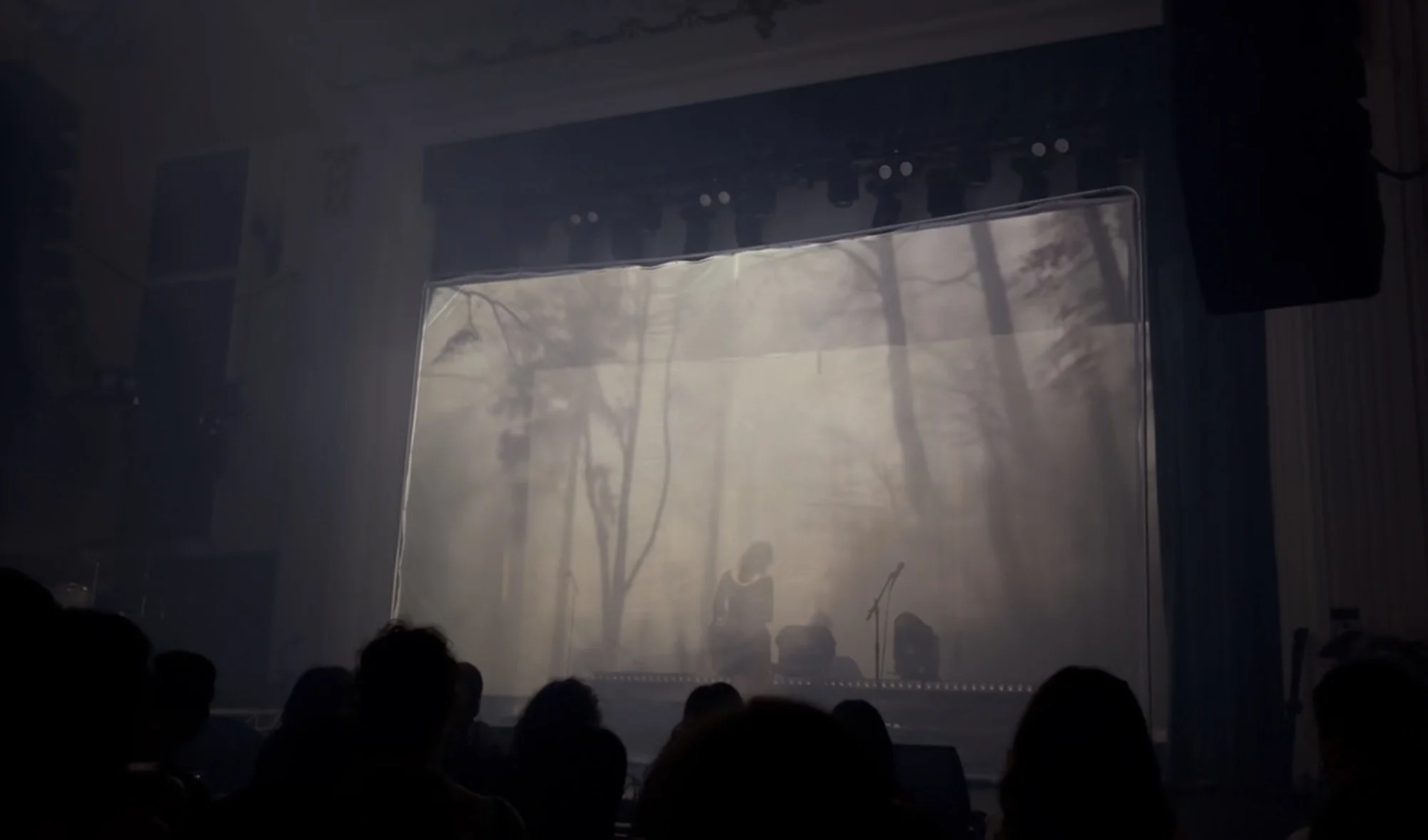
The music in the main room wasn’t to become any more accessible for at least a few hours. Sheffield-based experimental artist Voice Actor followed Drifting Clouds and performed behind a translucent curtain, incanting unparsable lyrics over eerie beat loops. It was not a tactile set; her music is sheer and holographic at the best of times. But the total demarcation between audience and artist lent the performance an entrancing, hallucinogenic quality. I was quite shocked by how easily I could be taken out of lucidity at a festival of that scale. If it wasn’t already clear, I thought Voice Actor was excellent.
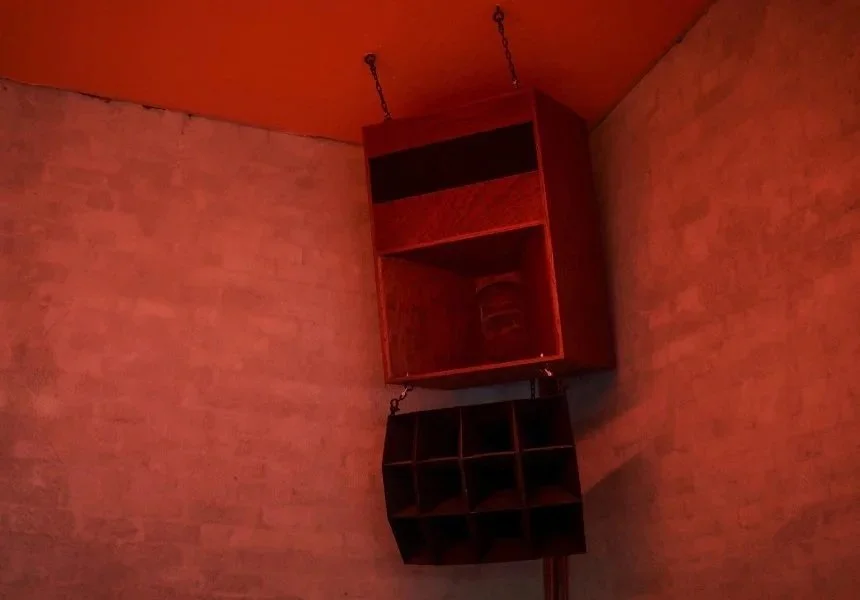
Photo: Ashley Ludkin
High Note Space Two — NTS Naarm, Saturday 28 February
Over a four-hour window that constituted my favourite music of the entire festival, I saw (eternal favourite) Fergus Jones, Elsie and Gi Gi all DJ on the NTS Naarm side stage spinning weirdo house and bass music for a room that fit like max thirty people at a time. But more even interesting than the music (high bar) was the room itself.
High Note Space Two is a tiny multipurpose bandroom adjacent to the High Note bar that, as I understand, is being managed by one or a couple of the original sideway guys. So sick. It is a minuscule room divided into two sections by some inset brick, the front section fit-out with two gorgeous wooden PAs hanging from the ceiling and a litany of equipment stuffed into various corners. It sounds wonderful; the whole thing feels exceptionally cool.
When it’s busy at Northcote Theatre, being in High Note Space Two sort of gives the impression of being in a spaceship. At an event like NTS Naarm, the line to get into High Note Space Two is something like an hour long, so once you make it in you really don’t have the choice to leave temporarily. This introduces the fascinating dynamic of everyone in the room being deductively committed to the music and keenly aware of their bladder capacity. There is a small stained-glass window in the top corner of the space from which you can see the ambient sunlight but no other way to observe the comings-and-goings of the world outside. The combination of spritely, buoyant club music and the gently wiggy aura of the room was transportative. At some point between six-thirty and ten-thirty-pm, the overcast afternoon slowly faded into violet darkness, though I was a bit beside myself to notice.
Yu Su b2b Moopie — NTS Naarm, Saturday 28 February
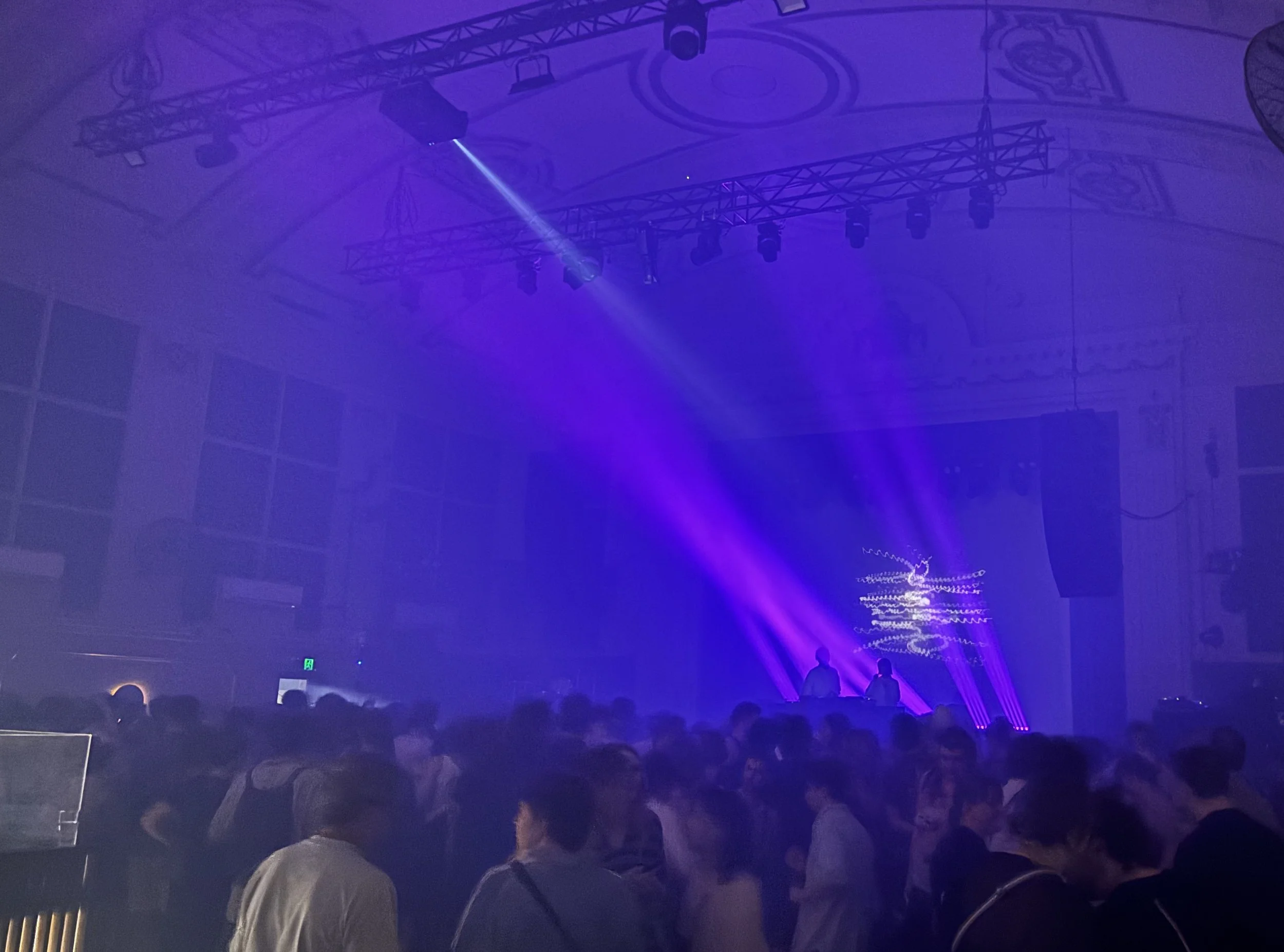
Two sides to this B2B. Yu Su: an imperiously cool DJ (and producer, also chef); one of the most elegant and tasteful electronic musicians working today; criminally underrated among audiences on this continent, so very rare to catch on home soil. Moopie: a DJ with a booking in Naarm just about every other weekend (though in a world with objectively too many DJs why would you book anyone else?); dance music’s Inspector Gadget. Together? Greater than the sum of their parts, yes, but you could also say they just default to the Yu Su description. The duo played icy, propulsive techno side-by-side in white button-ups and Moopie has never looked and will never look cooler.
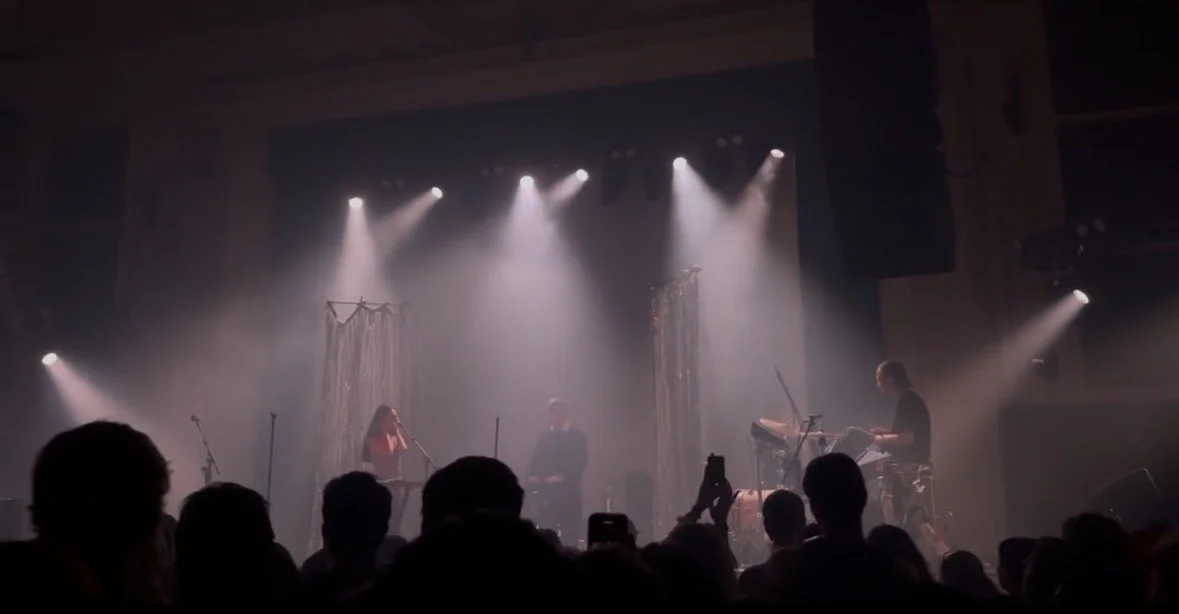
HighSchool, James K, Smerz — NTS Naarm, Sunday 1 March
I entered Northcote Theatre on Sunday for the second day of NTS Naarm—I mean, I sort of missed most of the day but I knew who I wanted to see—at nine-pm to the sound of the most rapturous, awesome song I heard all festival. The Australian expat band HighSchool were playing; I did not take a video. It sounded like the Cure but more murderous: noise rock heaviness cut through by the doomed beauty of gothic post-punk.
Trawling back through their archives, I’m pretty sure the song I heard was called ‘August 19’, though the recording is considerably less demonic than the performance I witnessed. The rest of HighSchool’s set was not as remarkable as how it opened except for the fact that the band are clearly predestined for punk fame judging by their strikingly gaunt and lengthy bassist.
I was not there for HighSchool, though. I was there primarily for Smerz, which was just a giddy experience. Their live setup boasts two additional band members—Rune Kielsgaard on drums and Villads Tyrrstrup on bass and miscellany—and as a result their rhythm section sounds massive in a way that departs sharply from the clean slink of their recordings. Smerz themselves are freakishly intuitive musicians and commanding performers, never once suggestive of the doubt their lyrics so casually wrestle with.
I was also there, as was the entire festival it soon became clear, for the New York-based trip-hop stargazer James K (Jamie Krasner). By ten-thirty-pm, Northcote Theatre was slathered with people softly swaying but mostly mesmerised by Krasner and her simple setup: laptop, guitar and a truly divine soprano. It felt like the physicality of her music was ever-so-slightly sidelined for this performance in favour of stillness and sentiment—the chunky momentum of tracks like ‘Blinkmoth’ and ‘On God’ less the rule and more the exception.
The set (and the festival, really) drew to a climax with the song ‘Play’, which Kranser introduced with the clarification that it documents the breakup of a friendship, a theme shared with another concert I attended days later. “Where did you go, my mate?” Krasner called out to the smoky room: strange vernacular for an American but intimately resonant to the crowd before her.
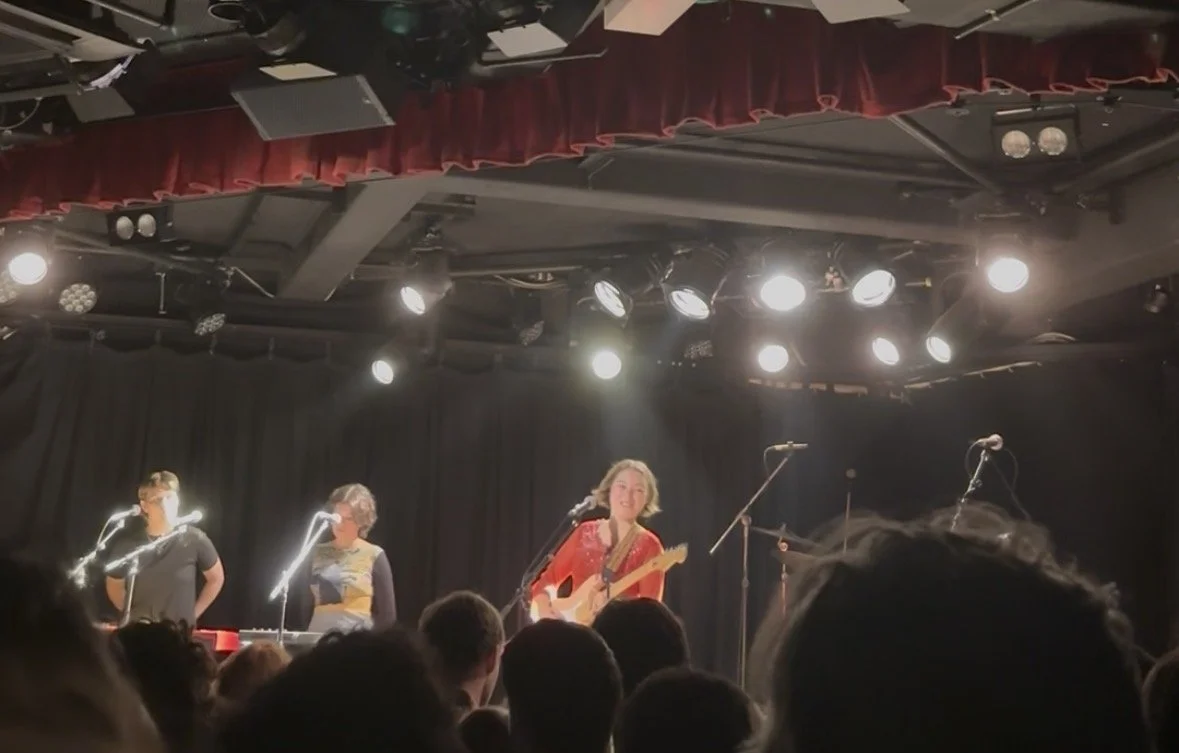
Stella Donnelly — Corner Hotel, Wednesday 4 March
Stella Donnelly is back touring a new album—Love and Fortune, released this past October—which, as I just alluded to, also documents the breakup of a friendship in heartbreaking yet life-affirming detail. It is a profoundly sentimental record, not that you would know it from Donnelly’s live show, which is an absolute riot. Her fans, myself included, are uniquely besotted by her, and Donnelly gives the impression that the feeling is mutual. She belts through a setlist heavy on favourites from her 2019 debut, Beware of the Dogs, with an incandescent grin and breezy charm. She readily admits to the new songs still needing some time to come together in their live form and coolly delivers a pristine vocal performance having only that day recovered from a lost voice. It is an predictably thrilling hour of music, but what I would have never expected was for her to reveal an encore cover of Chappell Roan’s ‘The Subway’ with opener Ullah, which instantly brought the house down.
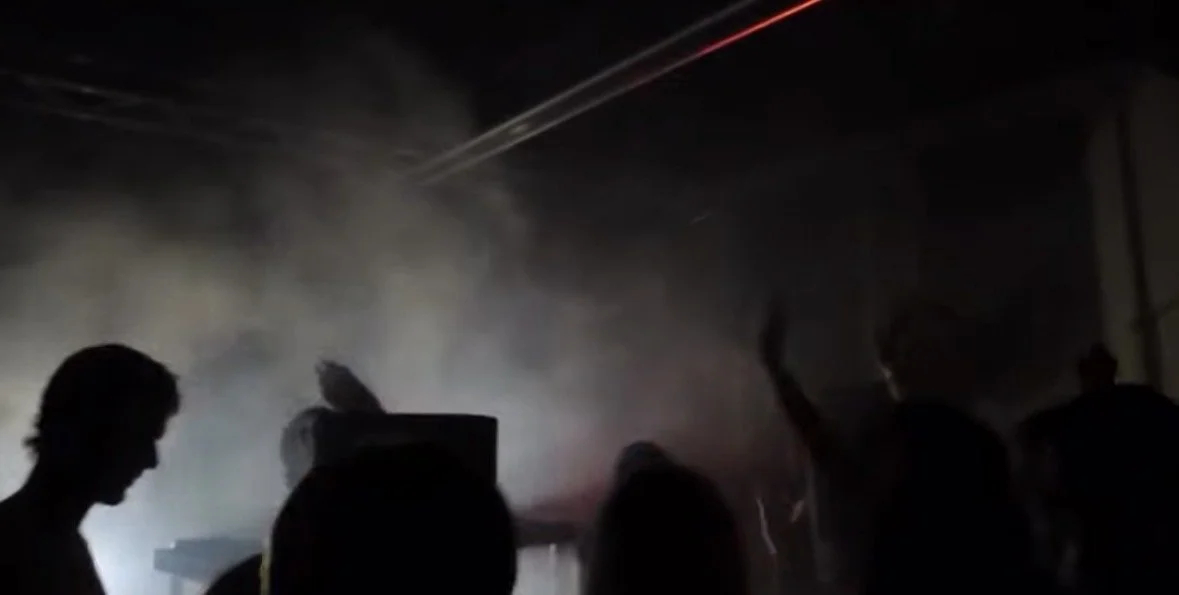
Absorb(ed) V — Miscellania, Saturday 7 March
I didn’t really attend Absorb(ed), unfortunately. The first four iterations of the beloved party were just beyond my reach when I lived in a different city, meanwhile a scheduling conflict meant I was unable to be at Miscellania for the entirety of its fifth and final edition this past weekend. But come Saturday night, my Bulldogs had just clinched an outrageous win and consequently I was feeling minded to move, so I shuffled my way into the city for at least a couple hours of freak dancing before I had to be on the road the following morning.
The relatively little that I saw of Absorb(ed) V put many thoughts in my head, though. (And when I say I saw relatively little, I mean it quite literally—the Misc clubroom was packed to the rafters for Takkak Takkak, so I could scarcely catch a glimpse of the enigmatic duo except for when they jumped up on the subs to crescendo the crowd.) It’s time to detour into those thoughts.
I have a bit of a tortured relationship with trance (specifically psy). Not so much that I don’t enjoy the music, I absolutely do, but because I grapple with the pedestal it is put on here in Australia and among my friends. There is a tweet from Montreal producer Martyn Bootyspoon that has never stopped rattling in my head since I read it: “Psytrance really is the music of The Oppressor”. Which is obviously hyperbole, and ignorant to the experimental leanings of psytrance that occupy genuinely progressive spaces, and to the history of First Nations artists pushing the genre forward on home soil. But he does make a good point, I would argue, at least to the extent that psy has an inglorious history of exploitation and cultural appropriation and isn’t internationally regarded as a bastion of cool.
A very simplistic characterisation of my taste in dance music is that I gravitate towards dub mutations more than psychedelic sound design. What this means in practice is that I love UK bass and all its siblings and cousins and aunties, and I like Scandinavian trance. My friends love Scandinavian trance, deifying it to the point of Reptant-derangement syndrome. Which is funny, and in fairness they have excellent taste. But I have always struggled with the assumption that fast, psychedelic techno and trance is necessarily more elegant than anything slower, more swung, more wriggly, more vocalised, less tunnelling. That sound design should always or ever be prioritised over rhythm. This is an assumption that has become a little institutionalised in Australian electronic music scenes, which some writers (you read this on Resident Advisor a lot) often attribute to the cultural primacy of bush doofs in dance music down under, but I think is less straightforward than that.
Whatever—the point is that while my own hesitations about trance are grounded in some loose cultural philosophy, they are ultimately the product of my own idiosyncrasy. Reading Audrey Jo Pfister’s essential history of Absorb(ed) for the Disclaimer journal, I was struck by the central fascination of the Absorb(ed) project with “IDM, (psy)trance, dark and weird breaks”, and perhaps a little unnerved by it too. Maybe this is because I have been thinking a lot recently about a (paraphrased) quote by Kode9 that Tom Lea often brings up on the tastemaking underground music culture podcast No Tags: “I don’t understand why we value music you can’t dance to more than music you can dance to”. Maybe this is downstream of my own insecurities about not committing more fully to the experimental corners of the Naarm or Ngunnawal club scenes.
Maybe this meant that, upon arriving at Miscellania on Saturday, I felt a morsel of cynicism lurking within the deep reverence I have always had for the Absorb(ed) party having observed its evolution from afar over the past five years. Well, the crowd went completely ballistic for Takkak Takkak, who departed from the burrowing sound of their audacious Nyege Nyege record with a set that leant into—as you might expect from the nature of this reflection—trance, gabber and the more atonal end of hardcore. It was thrilling, but I could tell I wasn’t quite on the same plane of symbiosis as the rest of the crowd. On the dancefloor, I was ruminating: is it fair to be a little cynical, or am I mistakenly applying conventional logic to experimental art? Is there something spectacular about dance music of this intensity that I’m just not getting?
These questions I don’t yet have an answer to. I think they are questions that justify a lifelong pursuit of creative, bold music and performance. But what I can tell you is that Female Wizard was so fucking sick those questions ceased to matter in my mind. Female Wizard played footwork, glorious footwork, for a blistering hour that could have been much longer, who knows, I was a bit blasted and couldn’t really think straight. Footwork that was no less experimental and cacophonic than the occasion demanded, but human, rhythmic and deeply emotional in a way that incinerated any latent cynicism left in me.
I don’t have a conclusion to this piece. I didn’t make it to Middlezorb; I didn’t really experience Absorb(ed) in a holistic way. I loved my four hours there, they challenged me, and I got to briefly witness the ecstasy that the special party conferred on pretty much everyone in attendance. To the extent that I can’t quite tap into the same effusive wonder about the party as other people can, I am acutely grateful that being there compelled me to write critically about music, which means more to me than nearly anything in the world. I believe every slogan Absorb(ed) has ever immortalised. Bad music… I not dance. Good music. I dance! I love good music. That’s my problem! I like music. Music will be radiant forever because of you personally. I hope that’s enough.
Sam Gollings
12 March 2026